This is section one on this blog post another section is to follow on how the subject was photographed
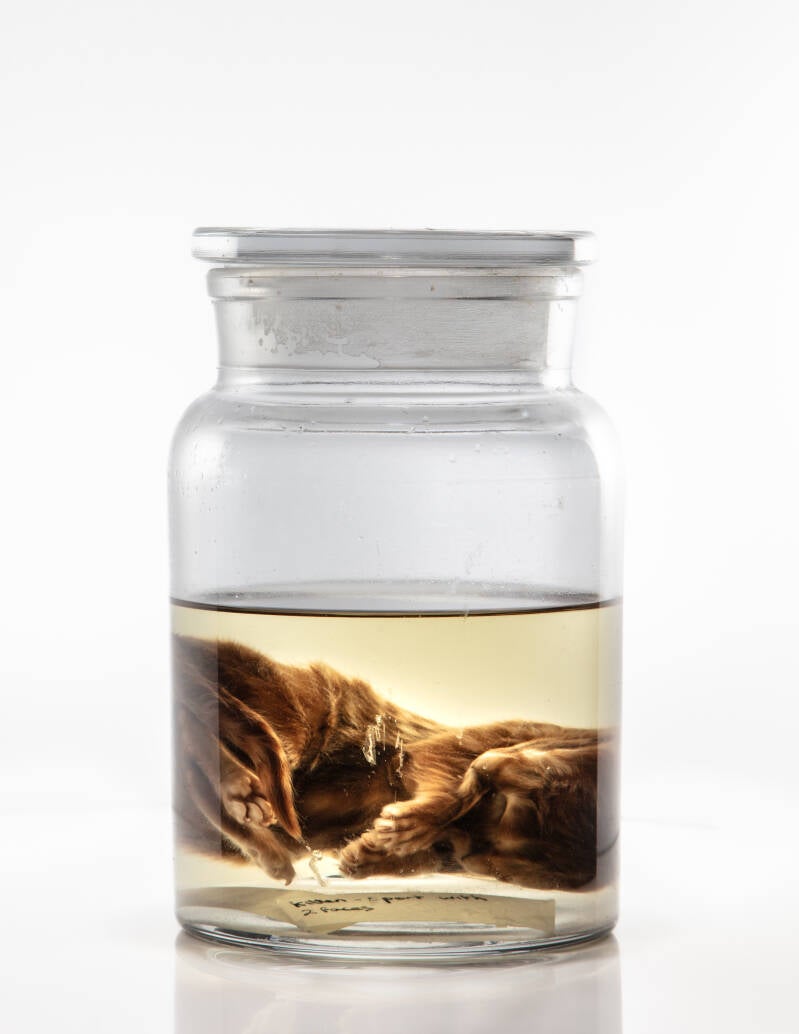
The two-faced kitten specimen represents a rare congenital defect known as craniofacial duplication. Understanding the developmental mechanisms (etiology) that produce this anomaly is essential for assessing its typical prognosis and the biological factors that influence longevity.
Craniofacial Duplication: Terminology and Phenotype
Definition and Classification
The condition is formally classified as Diprosopus (derived from the Greek for "two-faced"). It is characterised by the duplication of facial features to a varying degree on a single head structure. Phenotypes range from less severe instances, such as a duplicated nose with widely spaced eyes, to the most extreme cases where the entire face is duplicated.
The classification of this anomaly is important: individuals with Diprosopus typically possess one trunk, normal limbs, one head, and one brain, even if the face is completely duplicated. They are considered a single individual suffering from a patterning defect. However, researchers have sometimes classified severe Diprosopus (where two complete, identical faces are present) as a rare variant of conjoined twinning, particularly when the duplication is thought to result from the cranial bifurcation of the notochord during neurulation. In cats, this condition is colloquially known as a "Janus cat".
Phenotypic Manifestations and Internal Defects
The external duplication in reported feline cases typically involves two sets of eyes, two mouths, two tongues, and two noses. However, internal structures are often compromised, which dictates the severity and prognosis. Frequently associated internal defects include anencephaly (absence of the brain), neural tube defects, and severe cardiac malformations. In some detailed post-mortem studies, the cerebral hemispheres and anterior brain stem portions were found to be completely duplicated, indicating that the developmental disruption impacts the fundamental axis of the central nervous system.
Embryological Etiology: The Role of Sonic Hedgehog Signalling
The biological root of craniofacial duplication is traced to a malfunction in the early programming of embryonic development. The etiology highlights a critical vulnerability in the mechanisms that establish the body's midline structures.
The Mechanism of Cranial Duplication
Diprosopus is theorised to originate during the (pre)gastrulation stage of embryonic development, likely through a mechanism involving the bifurcation of the axial mesoderm during gastrulation or, alternatively, the coalescence of two embryonic fields. This bifurcation of the notochord is believed to cause two vertebral axes and neural plates to develop adjacent to one another, resulting in the subsequent duplication of structures derived from the neural crest.
Dysregulation of the SHH Pathway
The most robust explanatory mechanism attributes the anomaly to the dysregulation of the Sonic hedgehog (SHH) signalling protein. SHH plays a fundamental role in embryonic development, acting as a morphogen essential for craniofacial patterning, controlling the organisation of embryonic cells, and directing the size and shape of neural structures.
The presence of craniofacial duplication is linked to an increase or excess in the expression of SHH. This excess causes an excessive widening of the facial field during development, leading to the formation of duplicated structures, such as two muzzles. Experimental evidence supports this conclusion: researchers have replicated duplication phenotypes, such as chicks born with duplicate beaks, by exposing embryos to an excess of the SHH protein. This mechanism demonstrates that Diprosopus is fundamentally a failure of proper midline patterning control. This is underscored by the observation that an insufficient amount of SHH causes the exact opposite condition, resulting in midline fusion defects like Cyclopia, where eyes and facial features fail to separate.
Survival Analysis and Case Studies
The final component of the analysis addresses the prognosis for kittens born with Diprosopus.
Typical Prognosis and High Mortality
The prognosis for Diprosopus is overwhelmingly negative. Due to the high correlation with severe internal structural failures, including anencephaly and duplicated brain structures, most affected human and animal infants are stillborn. For those born alive, survival typically lasts only a few hours or days. Immediate post-natal mortality is often attributed to difficulties in respiration and feeding. Even if two mouths are present, reports show both may attempt to suckle simultaneously, but only one mouth may be functionally connected to a single esophagus, rendering feeding ineffective and often leading to immediate failure to thrive.
The Record of Exceptional Longevity
Despite the typically lethal nature of the condition, a singular, notable case demonstrates that Diprosopus is not inherently incompatible with long-term survival under rare circumstances. Frank and Louie (often referred to as Frankenlouie), a Ragdoll cat born in 1999, achieved a remarkable lifespan of 15 years, dying in December 2014. Frank and Louie holds the Guinness World Record for the longest-surviving Janus cat.
The longevity of Frank and Louie, who had two faces, two mouths, and three eyes but only one brain and one functional esophagus , was directly attributable to this specific, fortunate anatomical configuration. This minimal necessary internal structure allowed the cat to bypass the immediate, fatal neurological and respiratory defects common to the syndrome. His survival also required extraordinary commitment from his caregiver, who had to tube-feed him for the first three months of life until he learned to eat on his own. This exceptional case confirms that while the presence of facial duplication indicates a severe early developmental defect, viability is ultimately determined by the integrity and singularity of the core organ systems required for survival, specifically the brainstem, esophagus, and trachea
Add comment
Comments