Finding Clarity in the Mess
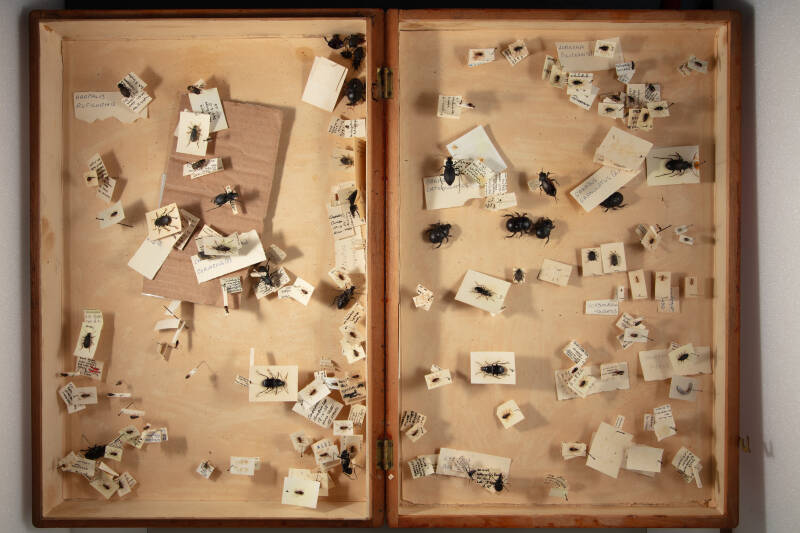
When we look at life, it often feels like a sprawling, disorganised mess. Goals are scattered, priorities are piled on top of each other, and the sheer volume of "stuff" can be overwhelming. It's a bit like looking into an entomologist's specimen box when it's fallen into disarray.
Take a look at this box.
At first glance, it's utter chaos. Dozens of tiny, preserved ground beetles are strewn across the wooden surface, each one pinned to a little label card, and many more cards are scattered loose. It's an explosion of insects and handwritten data, a collector's nightmare and a testament to the fragile nature of physical collections.
This, my friends, is a "mess in a box."
It feels overwhelming, doesn’t it? Just like a huge project at work, a challenging life transition, or simply the endless to-do list. The natural human reaction is to panic, to shut the lid, and to postpone the daunting task.
Breaking Down the Overwhelm: From Chaos to Sections
But how do you tackle an overwhelming mess? You don't try to solve all of life’s problems at once, and you shouldn’t try to organise this whole box in one go. You start by breaking the mess down into smaller, manageable sections.
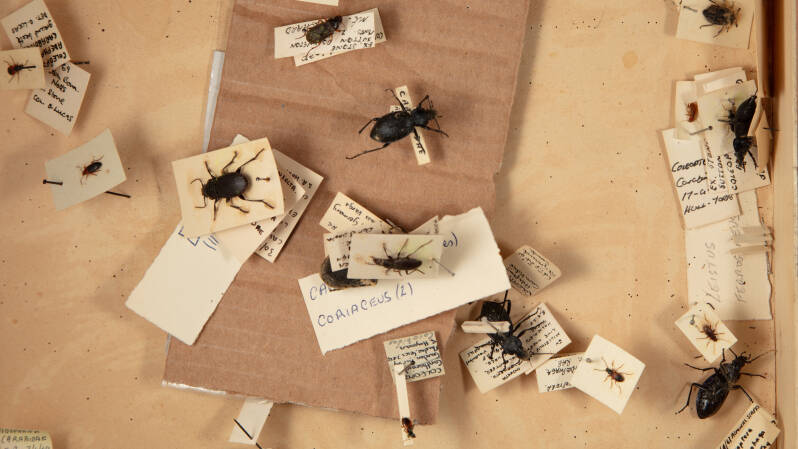
We can mentally (or physically) isolate small groups of specimens. Look closely at the collection, and you begin to see that some beetles are still attached to their original mounting boards, grouped by their original collection sites or species. By focusing on just a cluster of beetles, the task shifts from "organise the entire box" to "identify and re-pin this small group."
The act of separating them out—of taking a single group of specimens and giving them space—is the first step in turning chaos into helpful information.
Organising the Narrative: Finding the Thread
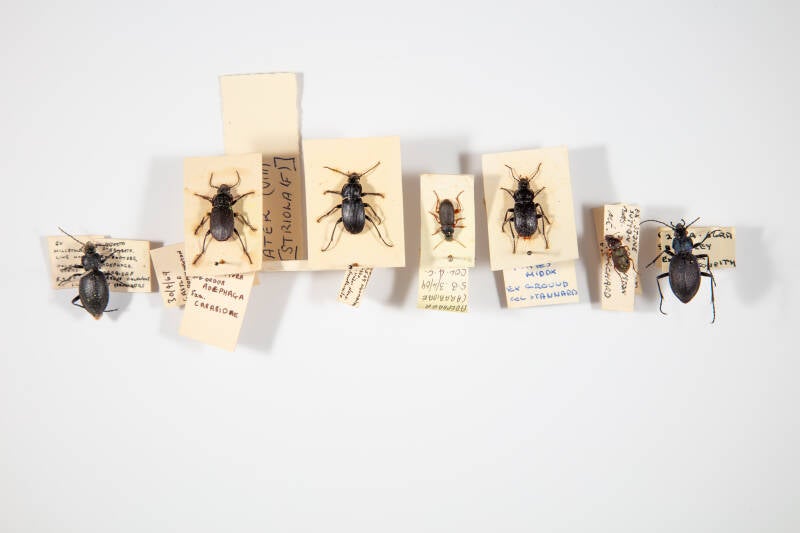
Once you've isolated a small section, you can start to organise the chaos into a narrative. Each insect is no longer just a black speck; it’s a data point. The small, often hand-written labels tucked beneath them are the keys to their story: the date they were found, the location, and their taxonomic identification.
In life, this is the equivalent of identifying your core values, setting specific goals, or prioritising the truly urgent tasks. You move from a state of generalised stress to one of informed action. The little pieces of information (the labels) start to make sense:
- This specimen was found in Sutton, 1948.
- That specimen is a Pterostichus strenuus.
You are creating order, understanding the data, and recovering the meaning.
The Importance of One Thing: A Focus on Detail
After all the sorting, grouping, and re-pinning, you can finally appreciate the importance of one thing.
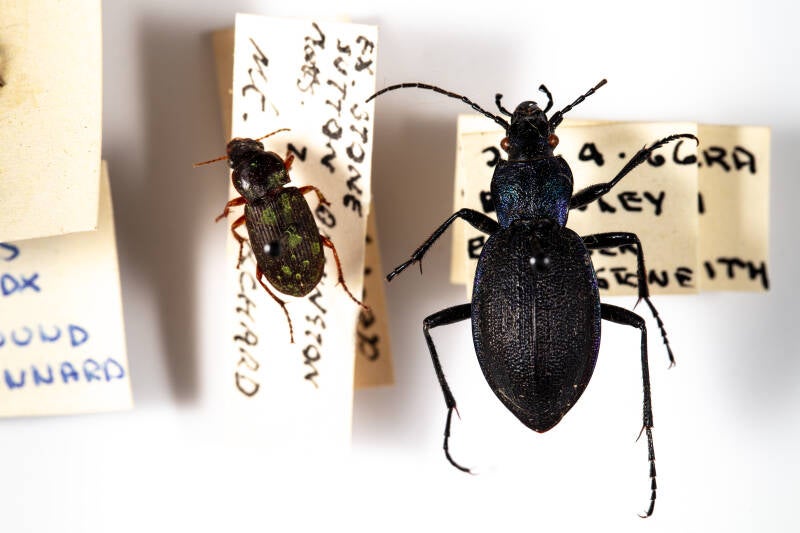
Look at a single, beautiful specimen, removed from the clutter.
Here we have two ground beetles, one of which appears to be the magnificent Violet Ground Beetle (Carabus violaceus), with its striking dark-blue metallic sheen. Isolated against a clean white background, the individual's detail shines through. The care taken in its original preservation is evident, as is its unique identity.
This is the ultimate goal. When we work through life’s chaos, we eventually arrive at a point of singular focus. We stop being overwhelmed by everything and start appreciating the importance of one thing: one relationship, one achievement, one moment of peace.
Life, like collecting, is not always simple. Each box—each phase of life—has to be worked through to make sense of what you are doing. The important thing is just to keep going, to keep sorting through the labels and the bugs, to find the direction you need, and try not to get distracted by a juxtaposition of problems or a new shiny object (as we so often do in life).
Start small. Break the box down. Find the clarity in the chaos.
Add comment
Comments