
Nestled among the historic spires of Oxford, the Oxford University Museum of Natural History often finds itself overshadowed by its grander, more renowned counterpart in London. Yet, this charming museum possesses a unique allure, demonstrating that size isn't the sole factor in igniting curiosity and wonder. Its more intimate scale allows for an incredibly creative and engaging display of the natural world, offering a truly exceptional experience.
Having visited both museums numerous times, I hold a special fondness for the one in Oxford. From my perspective, it outshines its London counterpart. The sheer vastness of London's museum can be overwhelming, with its extensive array of subjects. Additionally, visiting during school holidays can be a nightmare, as it seems the entire world flocks there with their children.
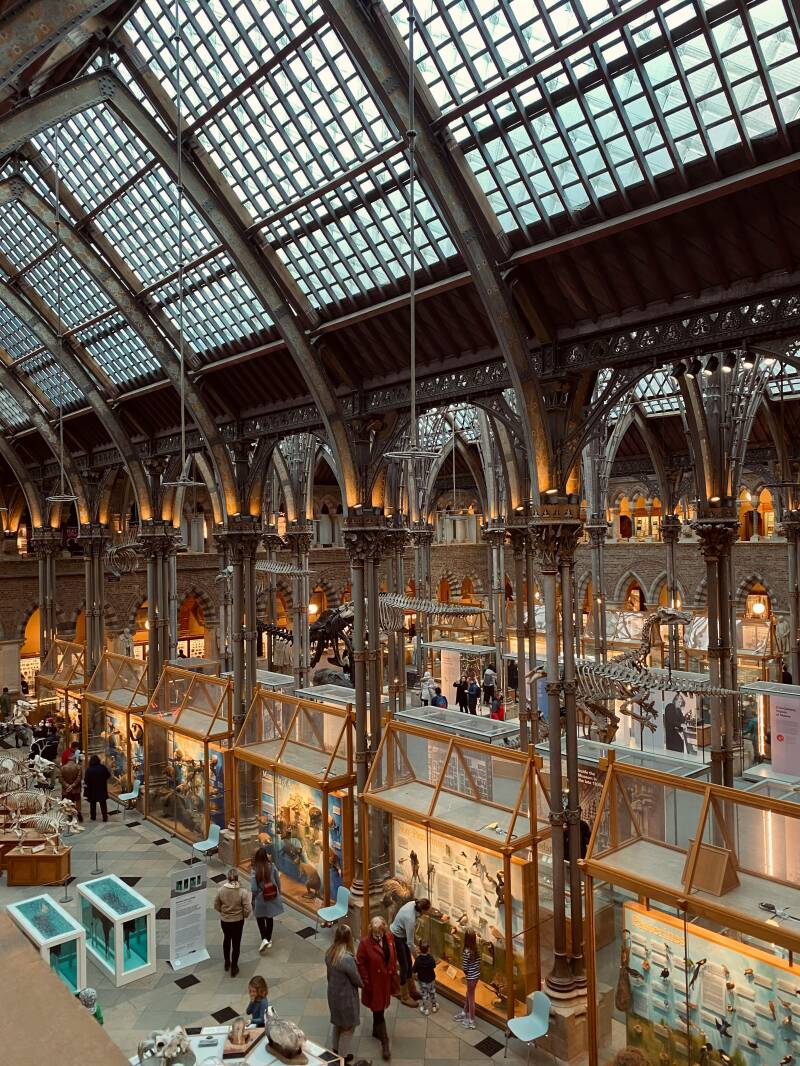
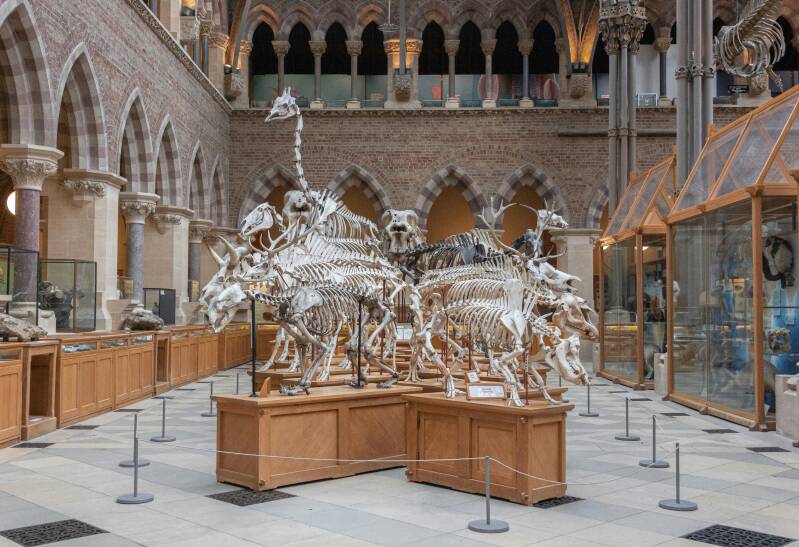
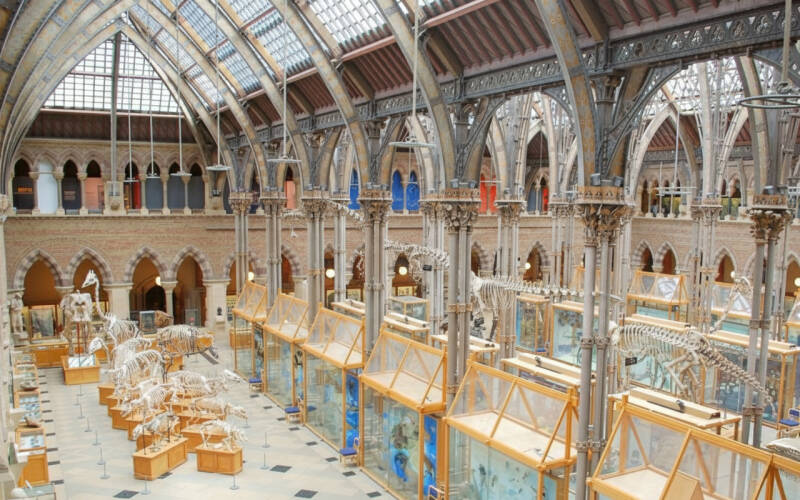
From the moment you step into the magnificent neo-Gothic court, you're greeted by towering dinosaur skeletons and a captivating array of specimens, all housed under a breathtaking glass roof. What sets this museum apart is its thoughtful curation. Instead of overwhelming visitors with endless exhibits, it offers carefully selected displays that encourage closer inspection and deeper thought. You'll find intricate insect collections, fascinating fossils, and beautifully preserved animals, each presented in a way that highlights their unique stories and scientific significance.
What I adore about Oxford is its palaeontology collections. They boast one of the world’s most significant assemblies of Middle Jurassic dinosaurs, with specimens so well-preserved that soft tissues remain intact. The collection also includes enigmatic fossils of the earliest complex multicellular organisms. With approximately 400,000 fossils, it spans from the Archean era, around 2.7 billion years ago, to the end of the Pleistocene, 11,700 years ago
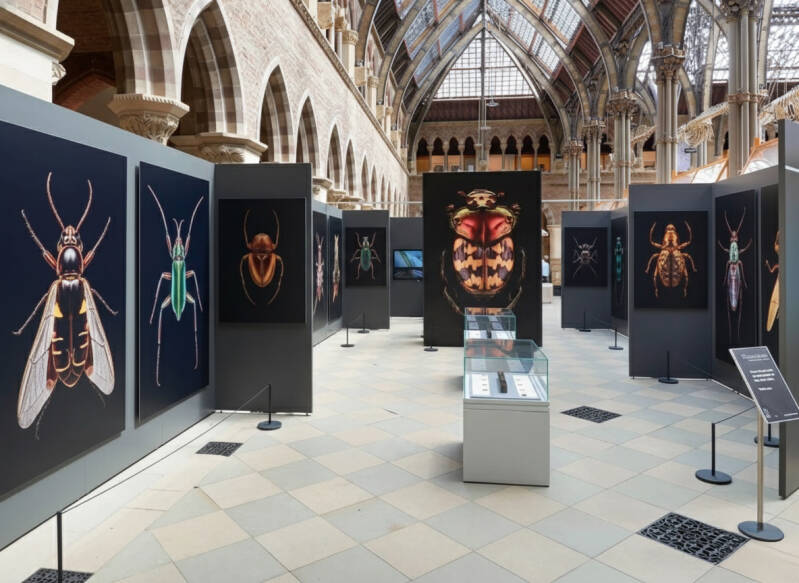
Among the museum's most thrilling exhibitions was Microsculpture: The Insect Photography of Levon Biss, a collaboration with the renowned photographer. Biss, celebrated for his extraordinary macro photography, introduced a new dimension to the museum's already impressive insect collection. His Microsculpture exhibition, which adorned the museum's walls, transformed tiny insects into monumental works of art.
Another exhibition that captivated me was Katherine Child's Light Touch, showcasing butterflies and moths from the museum’s collection. These two exhibitions were my favourites, as they resonated deeply with my own interests.
Add comment
Comments