Sometimes, the best natural history subjects aren't found in a far-flung jungle or a specialised lab—they're right under your nose. This past summer, my focus shifted from macro photography to domestic documentary: finally tackling the long-promised garden renovation my wife had been asking for.
We were trading a collection of sheds for a proper family seating area, and the last, most stubborn structure was the old shed at the very bottom of the garden.
This old shed was built on stilts because the garden dramatically sloped away to the right, leaving a sizeable, dark gap beneath it. After dismantling the wood, I got to the hard part: levelling the ground by hand to prep for the new decking supports. That’s when I hit something that felt like a thick, oddly shaped piece of plastic.
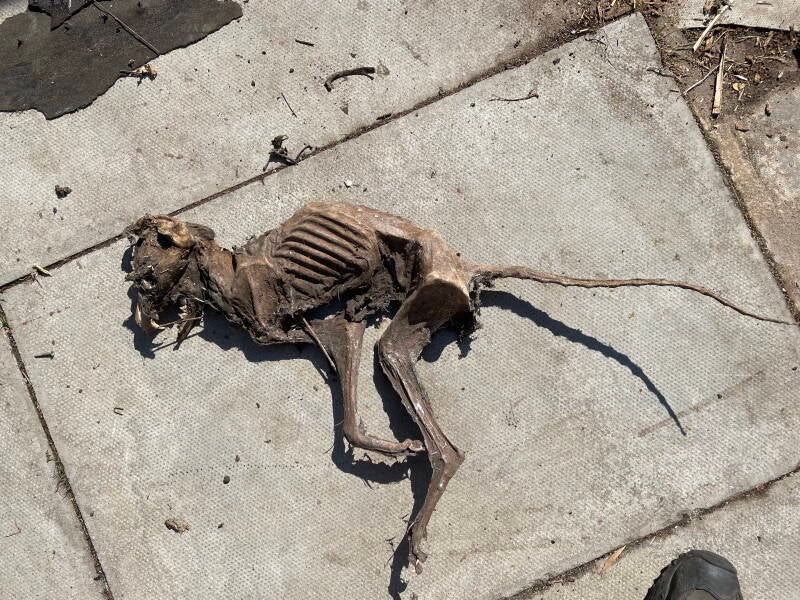
It wasn't plastic. It was the mummified carcass of a fox.
A Hidden, Hollow Narrative
The discovery was a stark, silent piece of natural history, perfectly preserved by the dry, protected environment beneath the shed. I have no idea how long it had been there.
The mummification was spectacular on one side: the skin was intact, showcasing the full impression of the ribs, the shape of the skull, and the outline of its front and rear legs. But when I carefully turned it over, the other side was completely gone. The carcass was hollow, with absolutely no trace of it left behind in the soil. It was as if the earth had neatly accepted the decay and only the shell remained—a pure, desolate specimen
The Ultimate Studio Challenge
As a photographer dedicated to controlled natural history, this was an extraordinary find. It wasn't about luck in the field; it was about bringing this unique specimen into my studio to tell its story.
This fox represents the perfect synthesis of my work:
- The Narrative: It’s a powerful, silent document of nature's process, decay, and preservation.
- The Studio Subject: It demands the precise control of lighting—my Godox flashes—to sculpt the shadows within the hollow structure and highlight the fragile skin and bone impressions.
The Ultimate Studio Challenge: Preserving a Transient Narrative
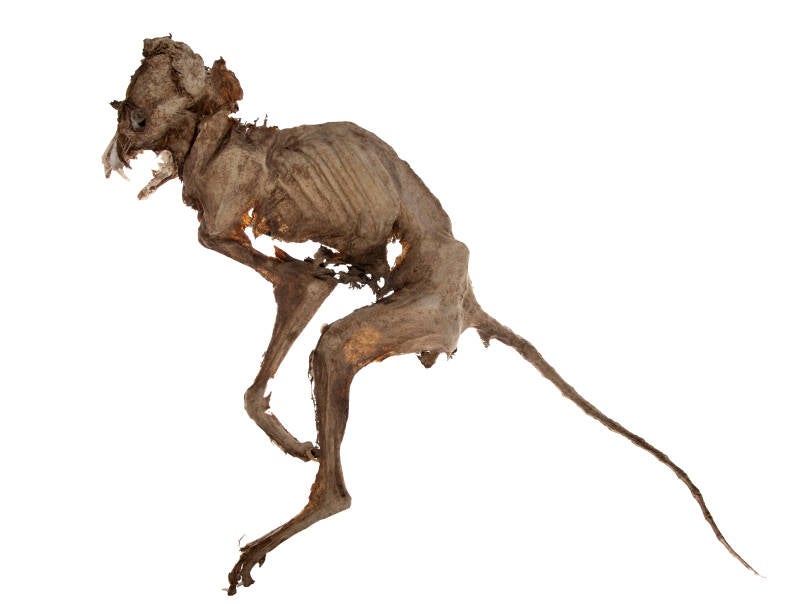
The moment I unearthed the mummified fox, my instincts as a photographer dedicated to controlled natural history took over. I knew I had a limited window to document this transient subject before further decay from handling or the elements took hold. My goal was to capture a lasting likeness of this unique find before I encased it in a clear perspex box for permanent protection.
To photograph the fox, I required an intense and meticulous lighting setup: a combination of eight Godox lights was employed—four Godox AD100 units for broad illumination and background power, and four Godox MF12 flashes to sculpt the intricate detail left on the carcass.
The Eight-Light Blueprint
Here is how I built the lighting for this spectacular, hollow specimen, ensuring a pristine, white backdrop and focused detail:
- The Background Base: I started with a large glass sheet topped with a white perspex sheet to ensure the background was purely white.
- Two Godox AD100 units were placed beneath the glass, both set to full power and grouped on Channel [A]to create a brilliant, high-key white background.
- The Main Fill & Control: Next, I introduced two more AD100s for general subject illumination.
-
- I had another Godox AD100 unit pointing down onto the fox, and a second AD100 placed at a 90-degree angle to the first. Both were set to 1/2 power and grouped on Channel [B]. This provided balanced top-down and side-fill light.
- Detail Sculpting: To ensure every preserved texture and the impression of the ribs were captured, I used the micro-precision of the MF12s.
-
- The four Godox MF12 units were placed strategically around the fox in different positions to illuminate specific sections of the skin and bone impression. These were the keys to unlocking the fine detail.
The final result, while not visible here, was an astonishing document of decay and preservation—a controlled image that honours the unexpected natural history found right in my own backyard.
Add comment
Comments